



How to Compare Two DVC Resale Listings at the Same Resort

When you’re browsing DVC resale listings and comparing contracts for the same home resort, sometimes the contract with the lowest price per point isn’t automatically the contract with the best value for you. To illustrate, let’s look at some questions to consider while comparing two Bay Lake Tower dvc resale contract listings: one for 160 points and another for 210 points.
What Size Contract Makes Sense for You?
The Number of DVC Points You Need Is Subjective
If you are looking at a larger contract because it has a lower price per point, will you be able to use all of those points? Take the time to review the DVC points charts, and get a sense for how many points you will need per year. It’ll vary depending on the time of year you travel, the room type you need, which resort you like, and how long and how often you plan to visit. While DVC points have some flexibility with banking and borrowing, points do eventually expire, so it’s good to have at least an estimate of how many points make the most sense for your travel patterns.
For instance, if you wanted to buy a Bay Lake Tower contract for weeklong stays in a Deluxe Studio each year, a 160-point contract could work most times of the year. You could get a 210-point contract for a lower price per point, but you would only need the extra 50 points if you travel during the more expensive travel periods and you want to upgrade to a Theme Park View room.
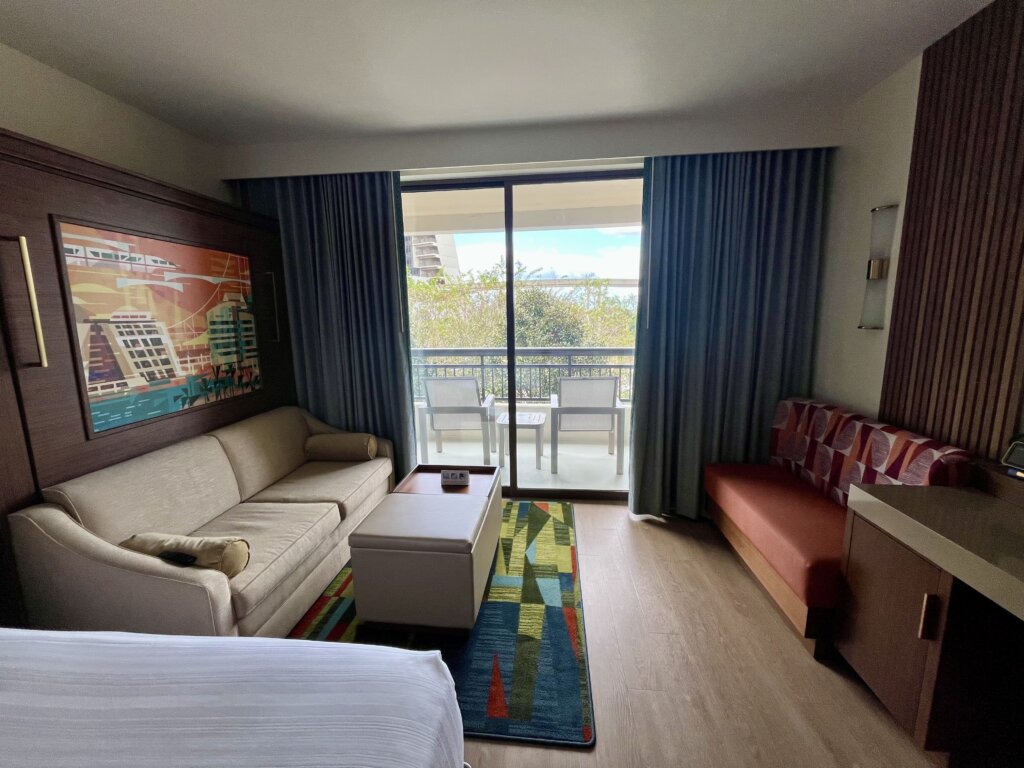
Bay Lake Tower Deluxe Studio
Larger Contracts Have a Greater Total Purchase Price
Typically, the larger the contract is, the lower the price per point. However, a larger contract will still ultimately mean a larger total cost, even if the price per point is lower. For example, a 160-point Bay Lake Tower contract going for $151 per point would cost a total of $27,008 when including the purchase price, Disney Vacation Club’s contract administration fee, and closing costs. By contrast, a 210-point Bay Lake Tower contract going for $136 per point would cost a total of $30,238 when including all the costs and fees. So in total, you would be paying $3,230 more for the larger contract.
Larger Contracts Also Mean More Annual Dues
Most people think about the initial cost of a DVC contract, but over time, the bigger cost can be the annual dues. The amount of dues you pay is dependent on the number of points on the contract, so the larger a contract is, the more you will pay in annual dues.
Going back to the two Bay Lake Tower contracts mentioned above, annual dues for these contracts are currently $8.74 per point. That would be a total of $1,398.40 for the 160-point contract and a total of $1,835.40 for the 210-point contract. A difference of $437 in annual dues can be significant, especially when you consider that annual dues typically increase 3% to 5% every year.
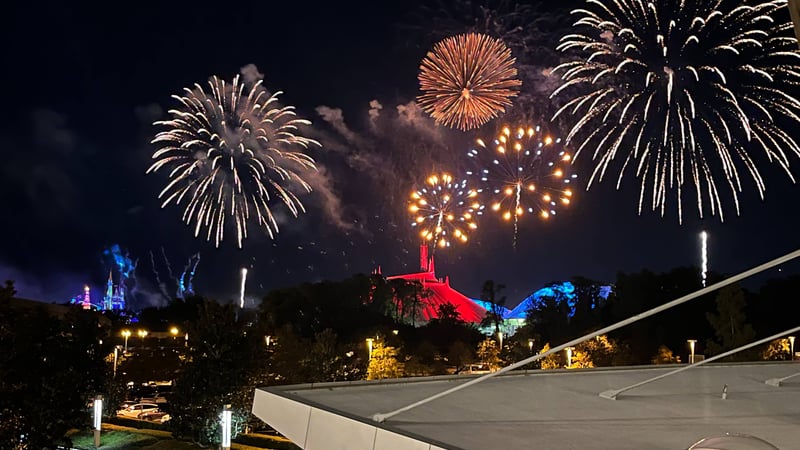
Fireworks view from Bay Lake Tower
Does the Number of Points Available Fit Your Plans?
The number of points on a contract isn’t the same as the number of points available to book trips. For instance, you could be looking at a loaded 160-point contract (one with points available to use this year and next year) versus a stripped 210-point contract (one without any points available to use for another year).
If you want to book a trip as soon as your contract closes, the stripped contract wouldn’t be a good fit. Even though a 210-point contract has more points than a 160-point contract, if the stripped 210-point contract did not have any points available until 2028, then you wouldn’t be able to book your trip yet.
Does the Use Year Make Sense for Your Travel Schedule?
When choosing between two DVC contracts, sometimes the deciding factor is the contract’s Use Year. While you can use your DVC points to book trips for any day of the year, your Use Year determines the date you receive your points each year, your banking deadline, and the date your points expire. Most of the time, your Use Year doesn’t matter. However, if you consistently travel during the same time of year, it helps to have a Use Year that starts just before your annual trip date, so you have ample time to bank your points or use any holding points should you ever need to cancel a trip.
Let’s say the 160-point Bay Lake Tower contract had a December Use Year, and the 210-point contract had a February Use Year. If you travel each December, the 160-point contract with a December Use Year would be a great fit since you would have most of the year to bank points or use holding points from a cancelled trip. If you bought the 210-point contract with a February Use Year and had to cancel a December trip at the last minute, you wouldn’t be able to bank those leftover points since the September 30th banking deadline would have already passed. If you cancel 30 days or less from check-in, you would also be left with holding points and only a month or so to use those points before they expire on January 31st.
Access all available Disney Vacation Club resale listings, or learn more about buying and selling with DVC Resale Market.
If you’d like to make an offer or request a free consultation about buying or adding to your DVC contract, the DVC Resale Market team is here to help!


Comments