



You’ve Just Joined DVC. Now What?
A little birdy told me that you just joined the Disney Vacation Club. Welcome home, my friend! Your family will enjoy decades, possibly even generations, of wonderful Disney vacations. Still, there are a few things you need to know. So, you’ve just joined DVC. Now what?
Plan Ahead
We’ll get to the fun stuff, I swear, but let’s start with a reminder. Your DVC membership isn’t free, even if you paid cash for your contract. Once a year, DVC will bill you for Maintenance Fees, which are also called Membership Dues.
This invoice reflects the fact that Disney has promised to perform upkeep on your Home Resort. You know that the property will never fall into a state of disrepair due to this agreement. However, the price to perform such extensive maintenance comes at a price.
As part of your contract, you’ve agreed to pay annual fees for the groundskeeping, hotel refurbishments, and so forth. Disney will charge you at the end of the year, and your bill will be due in mid-January. You should plan for that now to avoid a post-holiday billing cycle surprise. As a pro tip, you can use Disney gift cards to pay for Membership Dues. Since you can find these available at discounted prices at places like Costco throughout the year, stockpiling them (slightly) lowers the cost of Maintenance Fees.
Start Booking Your Trip ASAP
That old ad slogan, “The More You Know…” definitely applies to DVC. When you’re a new member, the sheer volume of new concepts will leave your mind racing. You cannot possibly know everything about your new contract. So, how do we learn? By doing!
One of the first things you should do is decide when you plan to vacation at a DVC resort. Then, you should use the Disney Vacation booking tools available online to evaluate your potential trip. You’ll quickly realize the depth and complexity of DVC membership.
Basically, you need to start playing with the buttons. It’s the quickest way to learn the inner workings of DVC ownership. Try to book a trip for next month. Then, do the same thing for four months, seven months, and ten months from now.

In the process, you’ll realize how quickly available vanishes at all but the least popular/largest DVC resorts. You’ll also recognize the various DVC Points discrepancies across the various Room Types.
Finally, you’ll notice something at the ten-month window. The only place where you can book is your Home Resort, which is vital information. You’ll come to understand the importance of planning a trip more than seven months in advance. That way, you can book your Home Resort during your exclusive reservation window. Then, at the seven-month window, you can modify your plans by switching to a different resort, presuming availability.
If there are not any Room Types available, that’s okay, too! You can book your first Waitlists and watch how the process unfolds. As the saying goes, there’s no better way of learning than doing. So, the faster you start doing, the quicker you’ll become a seasoned DVC veteran.
Learn the Terms
This one’s a bit rudimentary, but you also should take a crash course in DVC terms. I’m not talking about the verbiage members use such as “add-on-itis,” which refers to the highly addictive habit of buying more DVC contracts. I’m talking about the basics, such as Use Year, Travel Periods, Banking, and Borrowing.
We write about these things extensively here on the blog, and it’s vital that you understand these terms. The Use Year refers to the timeframe when your DVC Points enter your account each year. For example, if you have a December Use Year, the points enter your account on December 1st.
Travel Periods are the various timeframes on the DVC Points chart. They once had seasonal names, but DVC simplified them to specific dates. Some Travel Periods charge more DVC Points for the same hotel room, while other Travel Periods are cheaper. You can maximize your DVC investment by learning the best times to travel. Basically, you should be min-maxing the most vacation days for the fewest DVC Points possible.
Banking and Borrowing are terms that reflect the fact that you can access or store DVC Points from other Use Years. When you Borrow DVC Points from your 2026 Use Year, you can then apply them to resort reservations during your 2025 Use Year. Conversely, when you Bank DVC Points from your 2025 Use Year, you can Use them during your 2026 Use Year.
There are several other key terms to learn, like Holding Points and One-Time Use Vacation Points. I know that’s a lot of insider jargon, which is why I encourage you to look up all these terms on the blog to understand them fully.
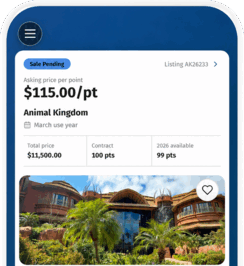
Access all available Disney Vacation Club resale listings, or learn more about buying and selling with DVC Resale Market.




Comments