



Should You Buy One Large DVC Contract or Several Small Ones?
Should You Buy One Large DVC Contract or Several Small Ones?
One of the strengths of the Disney Vacation Club program is its modular nature. Owners can purchase the contract(s) that best fit their needs.
When you decide how many DVC Points you need, you’ll still face a challenging decision, though. Should you buy one large DVC contract vs. multiple small contracts? Let’s discuss the benefits of each strategy.
| Consideration | One Large DVC Contract | Multiple Small DVC Contracts |
|---|---|---|
| Contract management | Generally simpler | May require tracking multiple deeds or memberships |
| Annual Dues | One resort’s dues rate | May have different dues rates across resorts |
| 11-month booking window | Priority at one Home Resort | Priority at each Home Resort you own, using eligible points |
| Booking flexibility | All points available under one contract | Points may be combined, depending on Home Resort and membership details |
| Selling your ownership | Sell the entire contract | Option to sell individual contracts |
| Transaction costs | One set of applicable resale fees | Separate fees for each contract sold or purchased |
Why You’d Prefer One Large DVC Contract
We’ll use two examples today to help you better understand your options. We’ll call the large DVC contract one with 200 DVC Points. We’ll use a pair of 100-point contracts as the smaller ones. So, how does a single large contract help you?
Owning a DVC contract empowers you to book consistent Disney vacations. To do so, you must manage your membership. Thus, the obvious advantage of a large contract is that you only have one contract to manage. You’ll appreciate that benefit when you pay Annual Dues each year.
With a single contract, you merely look up your Annual Dues once and pay your bill. Then, you’re good for the year and can use your points whenever you like. It’s a streamlined approach, and there’s a hidden benefit.
When you own multiple contracts, the price of your Annual Dues may vary, depending on whether or not you own at multiple resorts. You don’t need to worry about these different rates with a single contract. Your Home Resort’s price per point is what you’ll pay.
With multiple contracts at different resorts, you must account for each resort’s dues rate. Depending on how your contracts are set up, they may fall under one membership or separate memberships. Contracts under the same membership can generally be managed together, while separate memberships require additional attention.
In my experience, it’s easier to make mistakes when you’re juggling more information. Multiple contracts aren’t necessarily difficult to manage, but there’s more to keep track of.
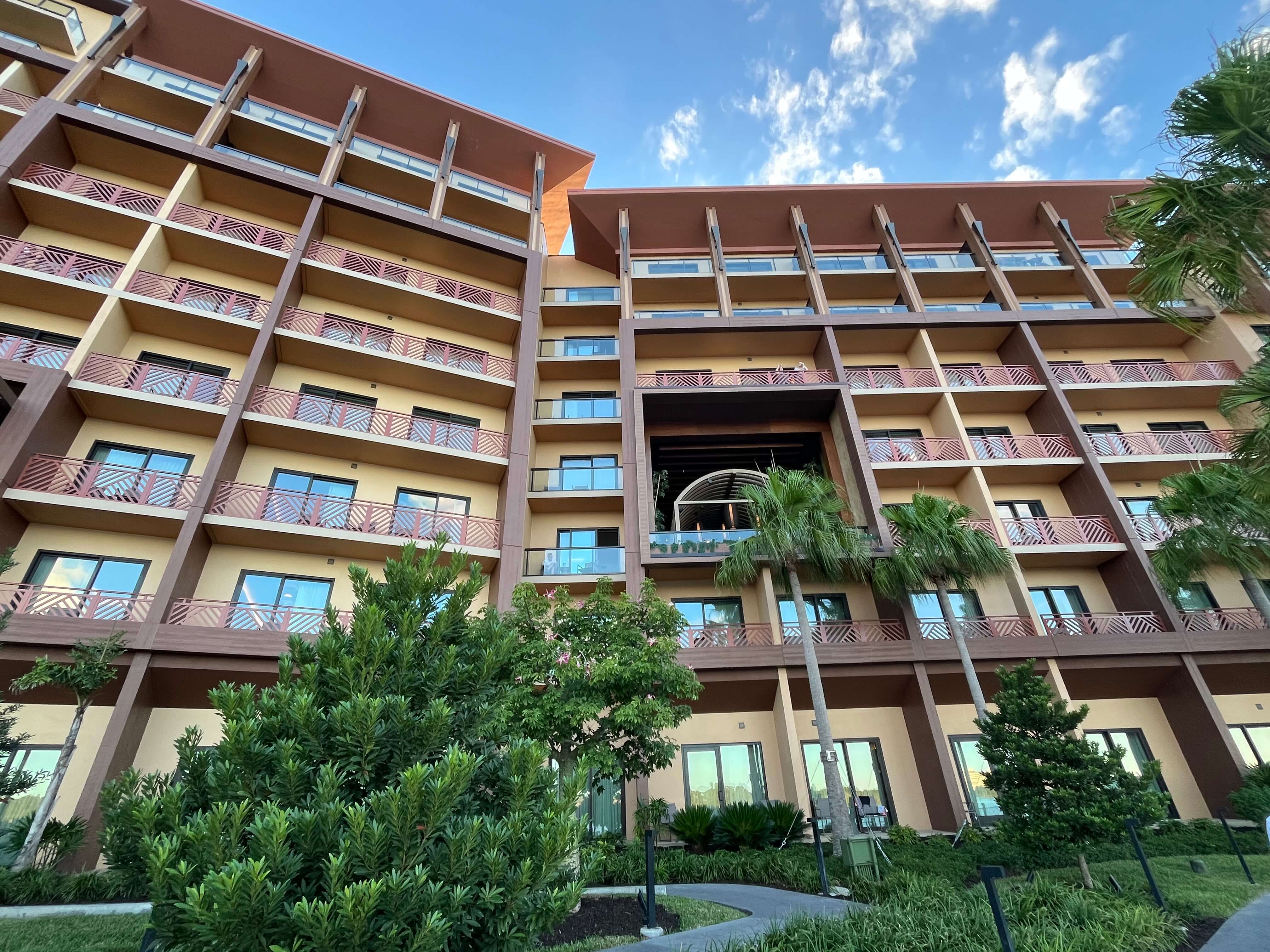
Polynesian Island Tower
Here Are Other Reasons You’ll Prefer a Single Contract
You can also book longer trips with a single DVC contract. When you use a 200-point contract, you can Bank and Borrow your way to as many as 600 DVC Points, subject to the program’s banking and borrowing rules.
You’ll enjoy tremendous booking flexibility with that many points available to you. Even if you only choose one or the other, you’ll still occasionally have 400 DVC Points at your disposal. At a minimum, you’ll have 200, which can provide plenty of options for a Disney vacation, depending on the resort, room type, and travel dates.
When you own multiple DVC contracts, your booking flexibility depends on how those contracts are structured. For example, if you own two 100-point contracts at the same Home Resort with the same Use Year and ownership details, you can generally combine those points within the same membership for reservations.
However, if your contracts are at different Home Resorts, you cannot combine their points to take advantage of the 11-month booking window at just one of those resorts. You’ll need to wait until the seven-month window to combine eligible points for a reservation at another DVC resort.
So, multiple contracts can provide plenty of flexibility, but they may require a bit more planning.
Then, we have the resale value conversation. This one cuts both ways. With a single DVC contract, you only have one transaction to manage when you decide to sell. As soon as you find a buyer and complete the necessary steps, you can close the sale.
With multiple DVC contracts, one deed may sell much faster than the other. So, you may find yourself waiting for the remaining contract(s) to close.
On the other hand, smaller contracts can appeal to buyers who don’t need as many points, and owning multiple contracts gives you the option to sell only part of your ownership.
Also, DVC introduced a $500 Contract Administration Fee for resale transactions in 2026. This is generally a buyer-side closing cost, although transaction terms may be negotiated.
With one contract, there’s one applicable administration fee. If you’re purchasing multiple contracts, the fee applies to each one, potentially doubling or tripling that expense.
That’s an important consideration when comparing the upfront costs of purchasing one large contract versus several smaller ones.

Old Key West – Olivia’s Cafe
Why You’d Prefer Multiple DVC Contracts
Let’s start with my favorite reason to own multiple DVC contracts. With each one at a different Home Resort, you’ll gain access to another 11-month booking window. So, you can purchase a contract at several DVC resorts if you like. Each one gives you priority booking access at its respective Home Resort.
With proper use of this benefit, you can improve your chances of getting the DVC room you want at your preferred resorts. There’s a catch, though. At the 11-month window, you can only use points associated with that Home Resort, including any eligible Banked or Borrowed points.
In our previous example, if you owned a 100-point contract at one resort and another 100-point contract somewhere else, you couldn’t simply combine all 200 points to book either resort at 11 months.
Again, Banking and Borrowing can provide a bit of flexibility on this front.
So, multiple contracts work better for those of us who prefer a few resorts. We can make each one a Home Resort, improving our odds of booking rooms there when desired.
Then, we have the Expiration Year conversation. The last thing you want is for your DVC contract to expire. Should you buy a large contract with an earlier Expiration Year, that will eventually happen. It’s an ironclad eventuality, even if it may be decades from now.
With multiple DVC contracts, you can keep selecting ones with later Expiration Years. Each purchase can extend how long you hold DVC ownership, even after an earlier contract expires.
Of course, every contract still has its own expiration date. Buying multiple contracts doesn’t extend the expiration of an existing deed, but it can give you ownership at resorts with different remaining terms.
You can also take a more modular approach with each contract. Each deed provides additional options for how you use or eventually sell your ownership. So, you can buy four or five add-on contracts and manage them according to your vacation needs.
By adopting this approach, you’ll better understand how the entire DVC program works. I’ve noticed that members with several contracts tend to become especially knowledgeable about booking windows, Use Years, and the different Home Resort advantages.

Animal Kingdom Lodge
Should You Buy One Large DVC Contract or Several Small Ones?
I don’t practice what I preach on this subject. When my family members and friends have asked for advice, I’ve suggested multiple DVC contracts. However, I’m a bit lazy about my membership. I prefer keeping up with one contract and one set of Annual Dues each Use Year. Juggling multiple contracts takes more effort than I’m willing to put into the program.
So, why do I recommend multiple contracts for others? Most people want flexibility, and they’re finding new ways to manage multiple contracts. Apps and other digital tools can help with tracking points, booking windows, and important membership dates. As such, my favorite advantage of a single contract, ease of management, may be less significant for some owners.
I don’t want to lead you astray, though. Here are quick bullet points about the advantages of each style.
For a single large DVC contract, they are:
- Easier contract maintenance
- Simpler Annual Dues management
- Straightforward vacation planning and booking
- All points available at one Home Resort’s 11-month booking window
- One set of applicable transaction fees when buying or selling
For multiple DVC contracts, the benefits are:
- More Home Resorts if you purchase at different properties
- Different Expiration Years if you buy at the right resorts
- More 11-month booking windows, improving your chances of reservations at multiple resorts
- More flexibility to sell part of your ownership later
- The ability to add points gradually as your vacation needs change

Boulder Ridge at Disney’s Wilderness Lodge
Ultimately, both approaches have their advantages. If you value simplicity and regularly vacation at one resort, a larger contract may be the better fit. If you enjoy staying at several resorts or want more flexibility with your ownership, multiple smaller contracts may make more sense.
Before making your decision, compare the available DVC resale listings to see how contract sizes, Home Resorts, and prices align with your vacation plans.



Comments